
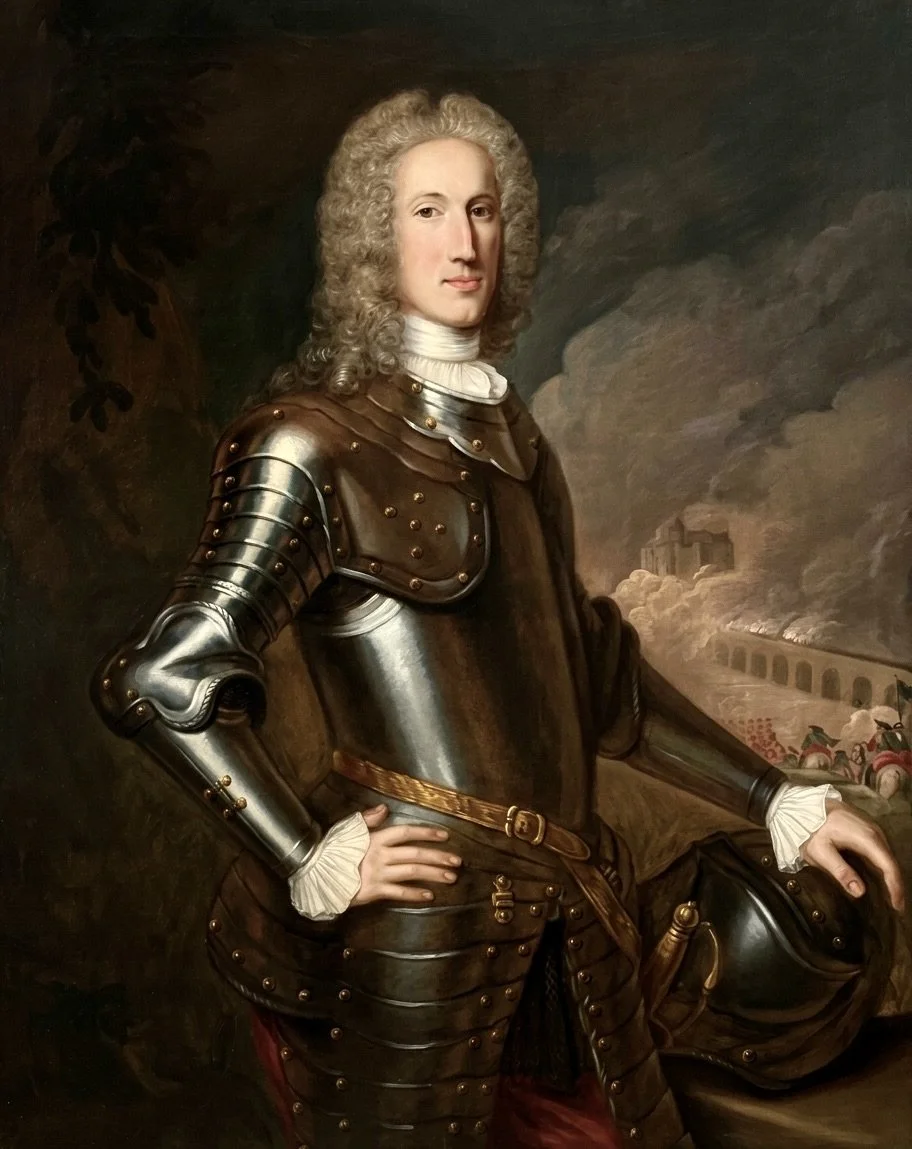
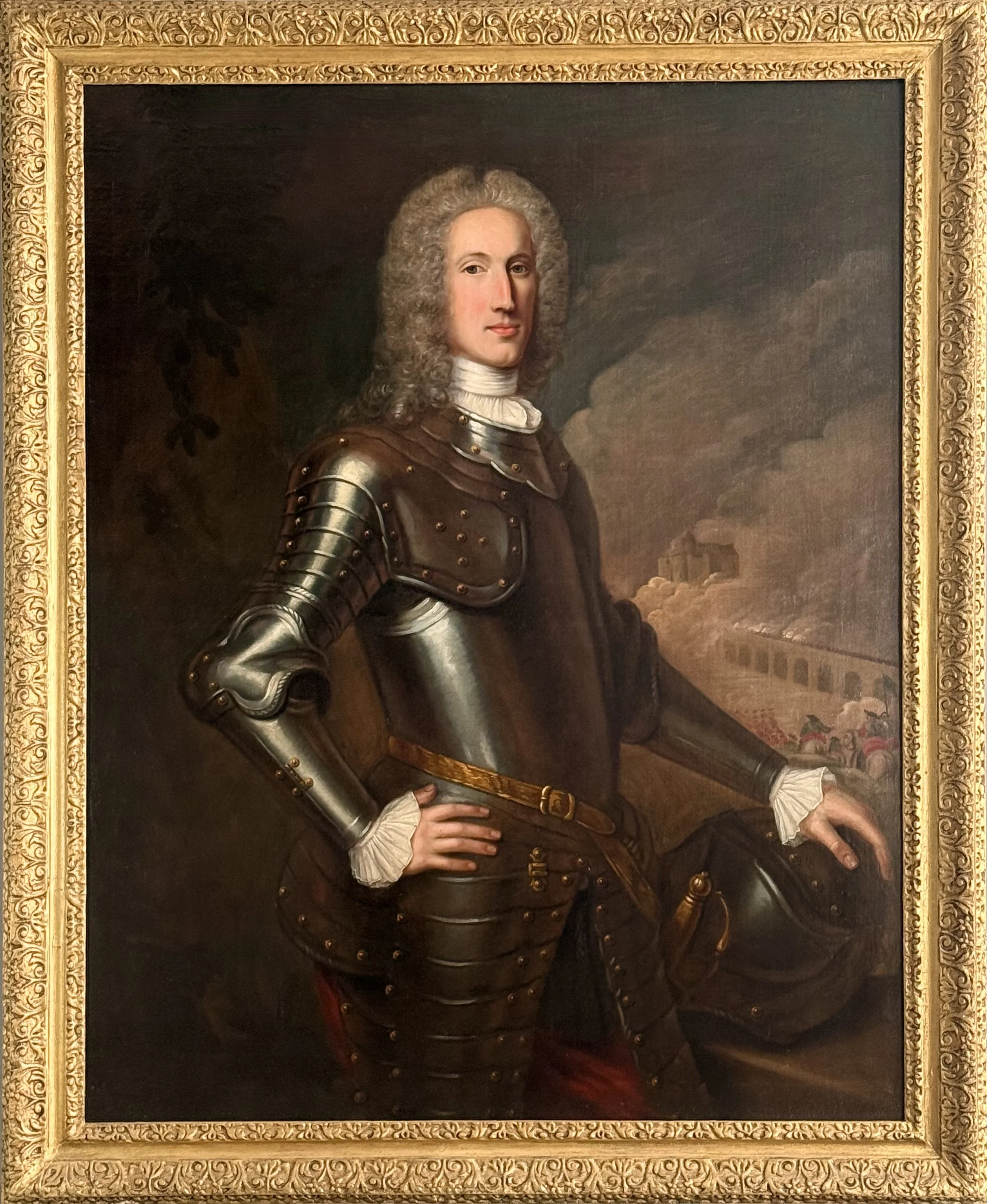
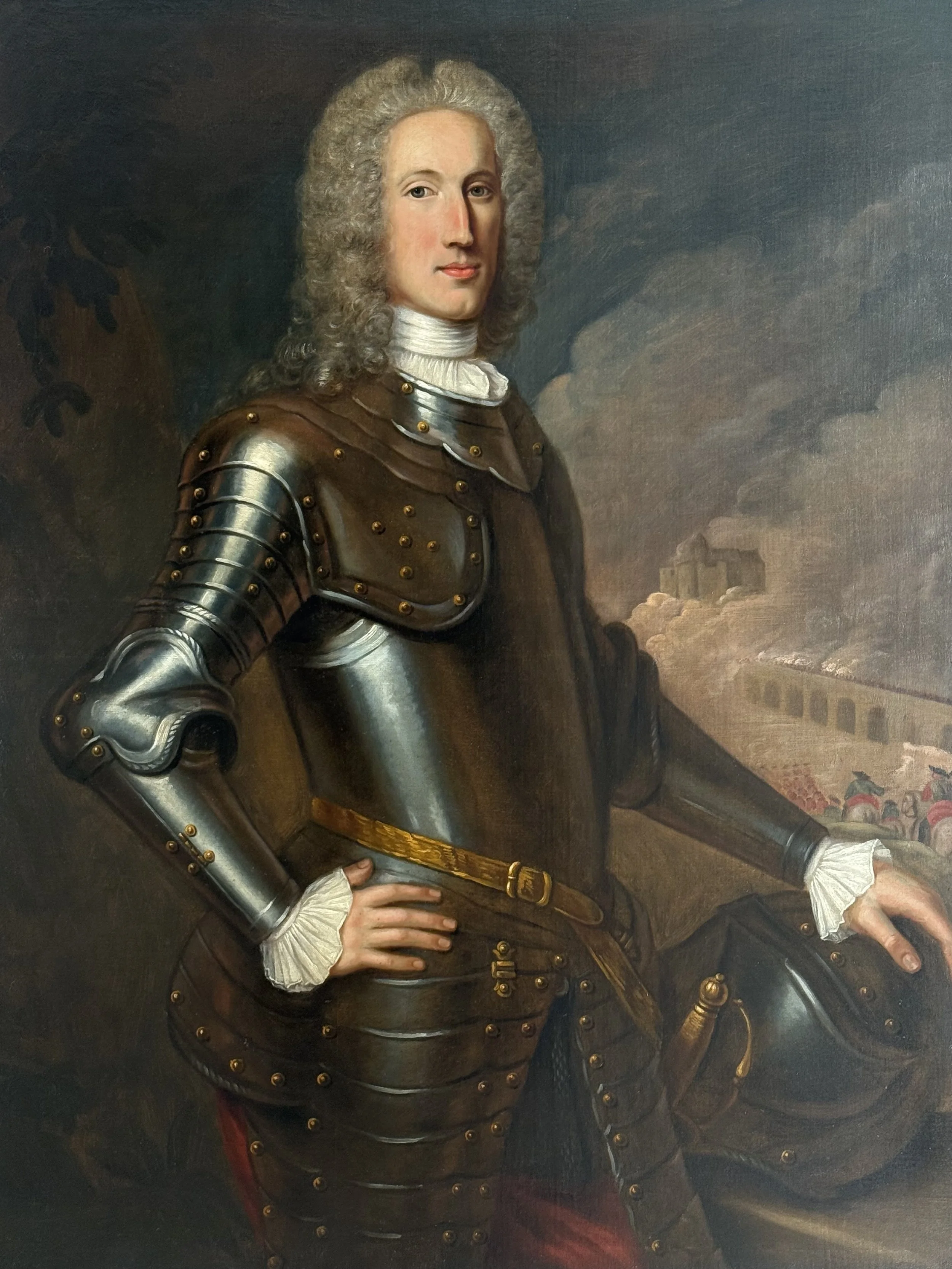
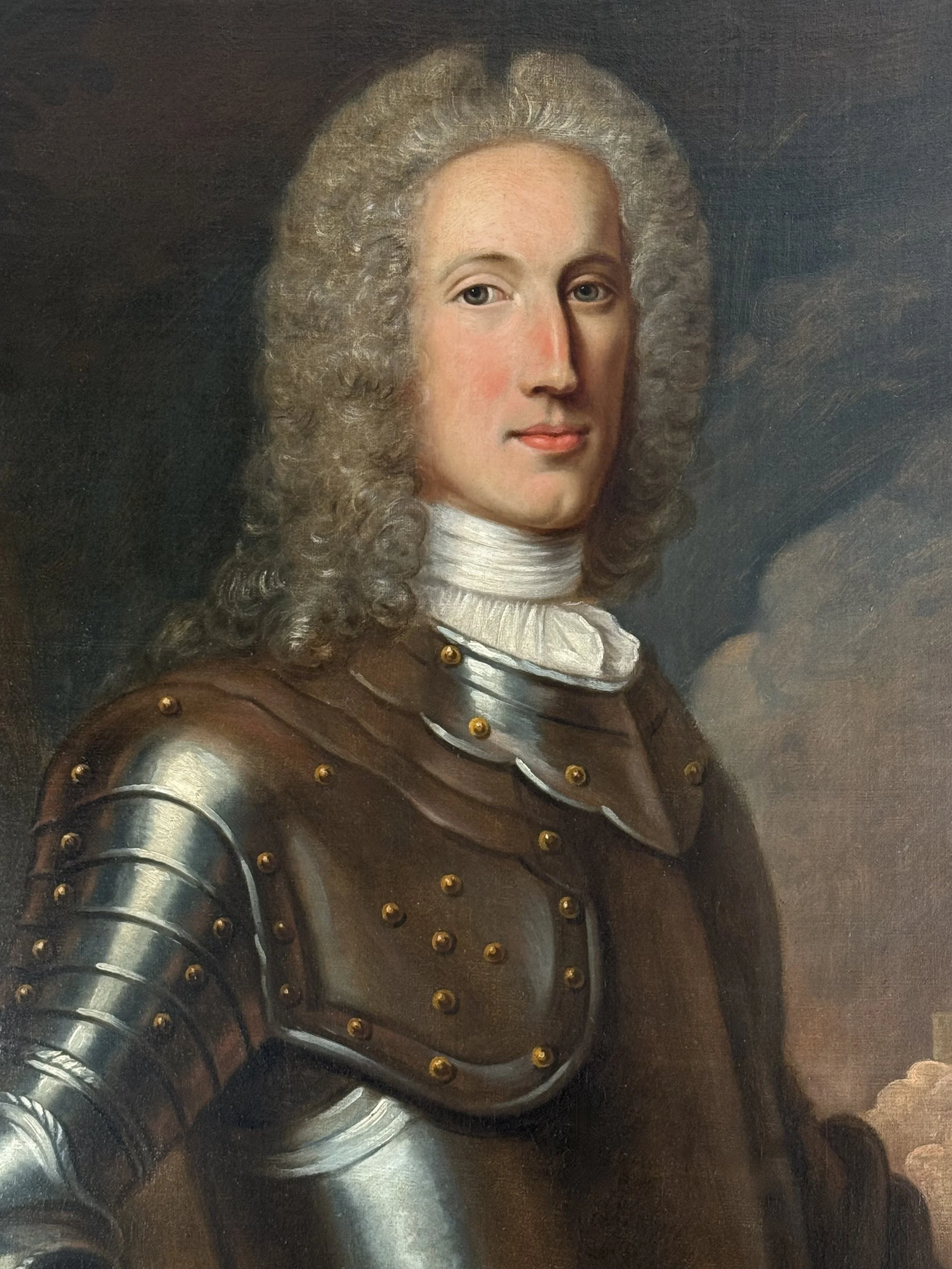
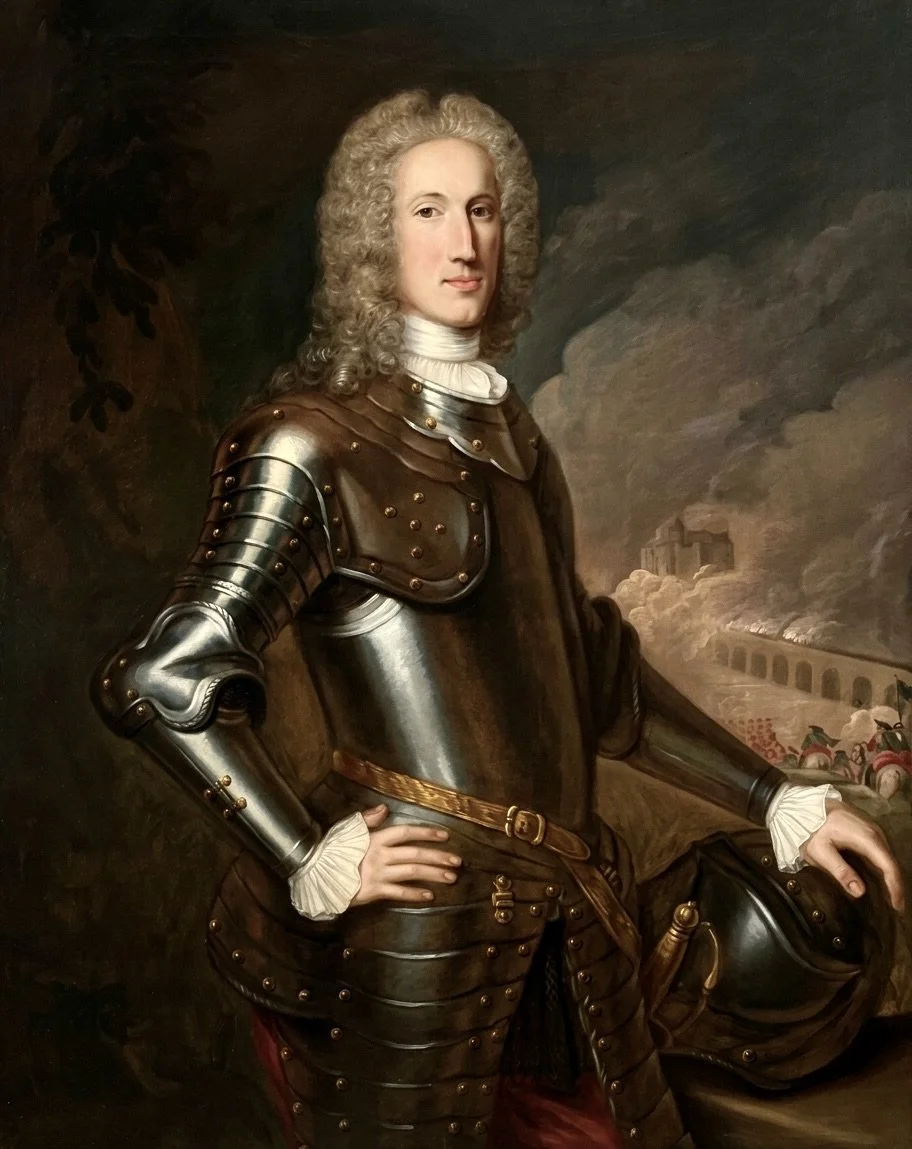
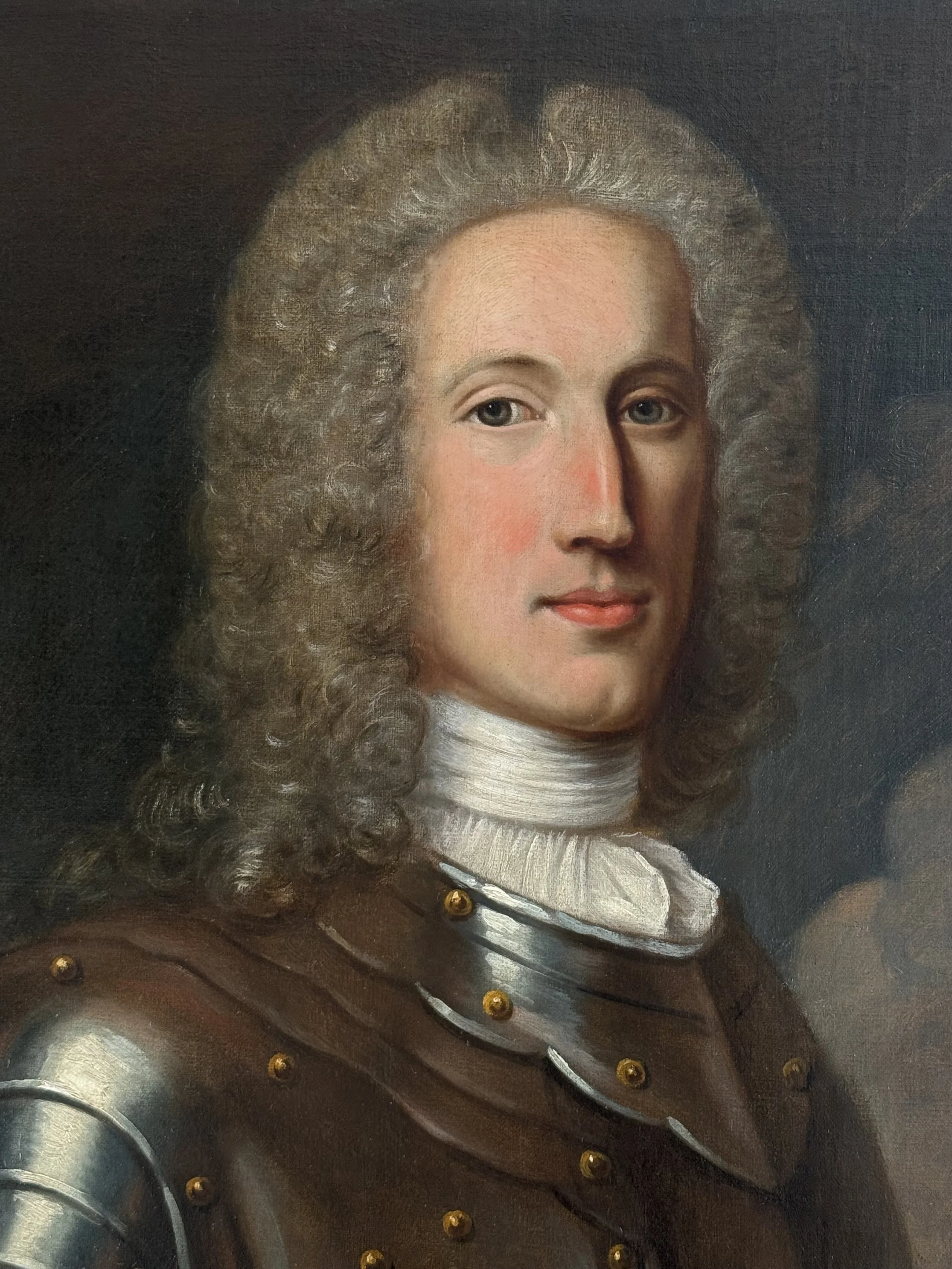
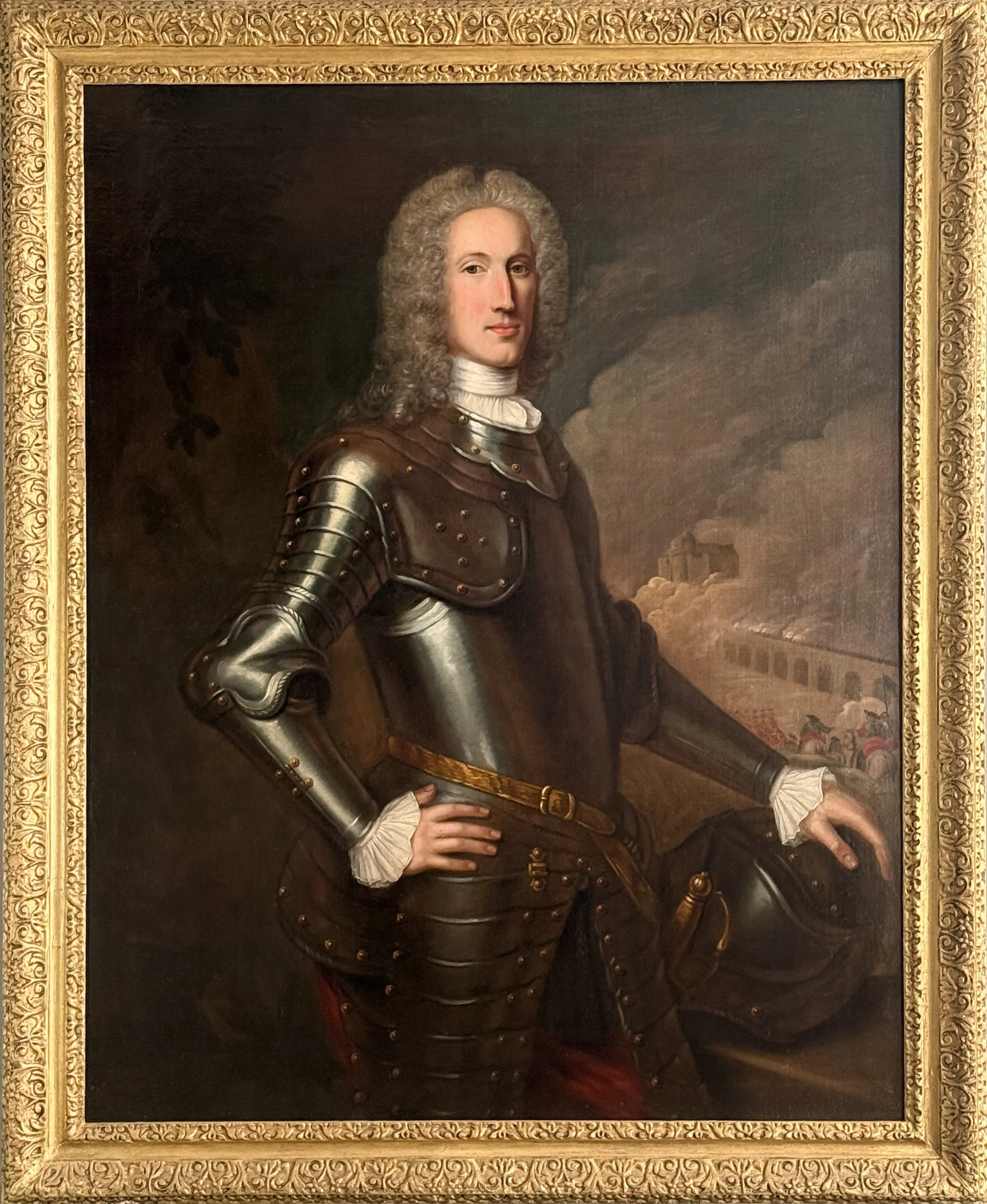
ATTRIBUTED TO JOHN SMIBBERT c1710 - PORTRAIT OF A NOBLEMAN IN ARMOUR.
Portrait of a Nobleman, three-quarter-length, in plate armour before a cavalry skirmish
Oil on canvas In a period carved and gilded frame. Canvas: 50" x 40" / 142cm x 116cm. Framed: 56” x 45.5" / 127cm x 102cm.
Price: £18000
PROVENANCE The collection of George Rae (1817-1902) at Redcoat Manor The collection of Charles Edward Leathart Rae (1883-1952) By family descent until 2026 Where acquired by Period Portraits
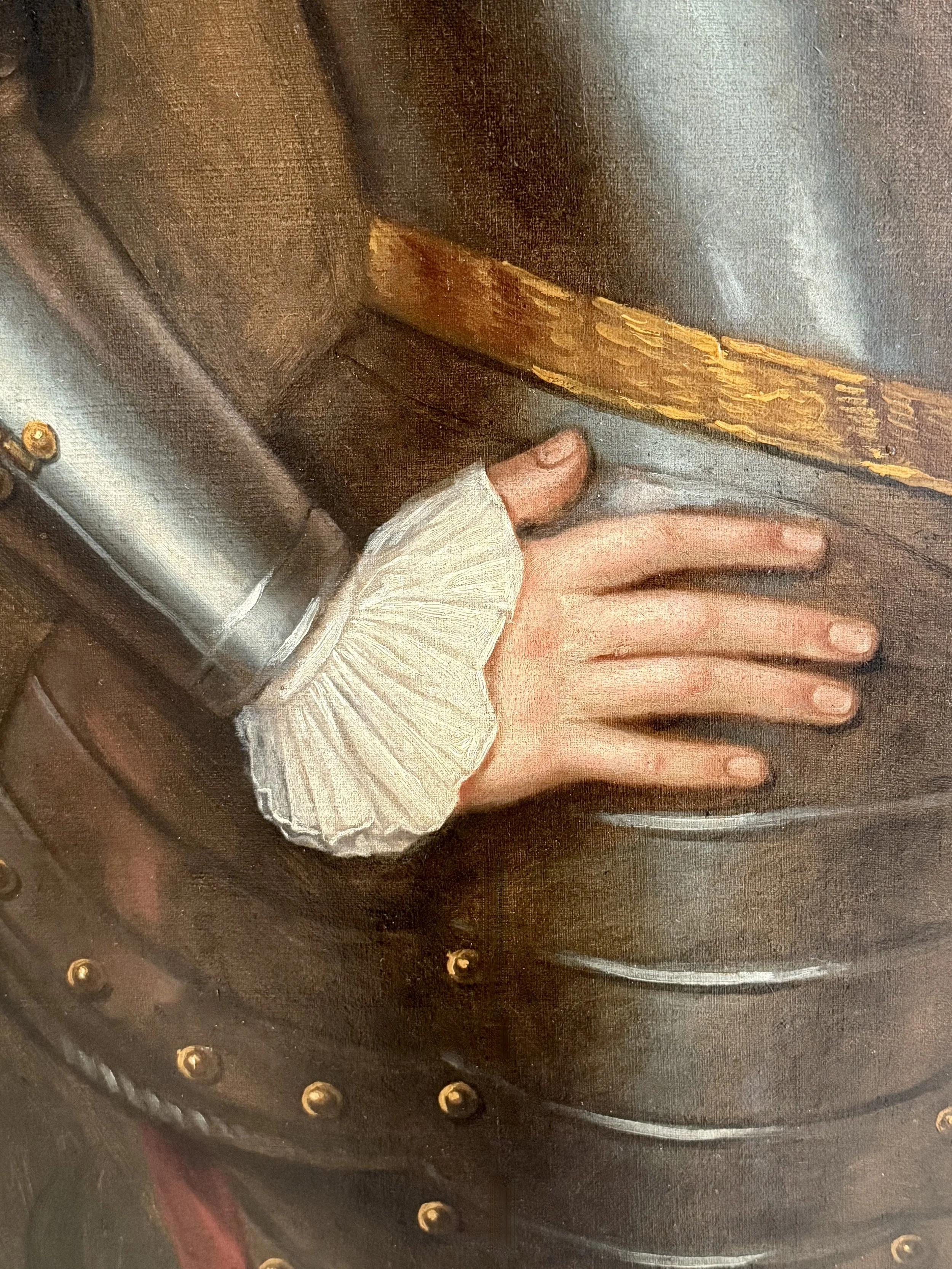
This imposing and glamorous three-quarter-length portrait exemplifies the grand Baroque military tradition that flourished in Britain during the first quarter of the 18th century. The handsome sitter stands confidently turned three-quarters to the right, with his right hand resting on his hip and his left resting upon a blackened burgonet helmet, and he gazes at us directly with a look of calm authority.
His long, centrally parted curled periwig (sitting flatter at the crown than the towering styles of the 1690’s) places the execution of this work securely circa 1710–1715.
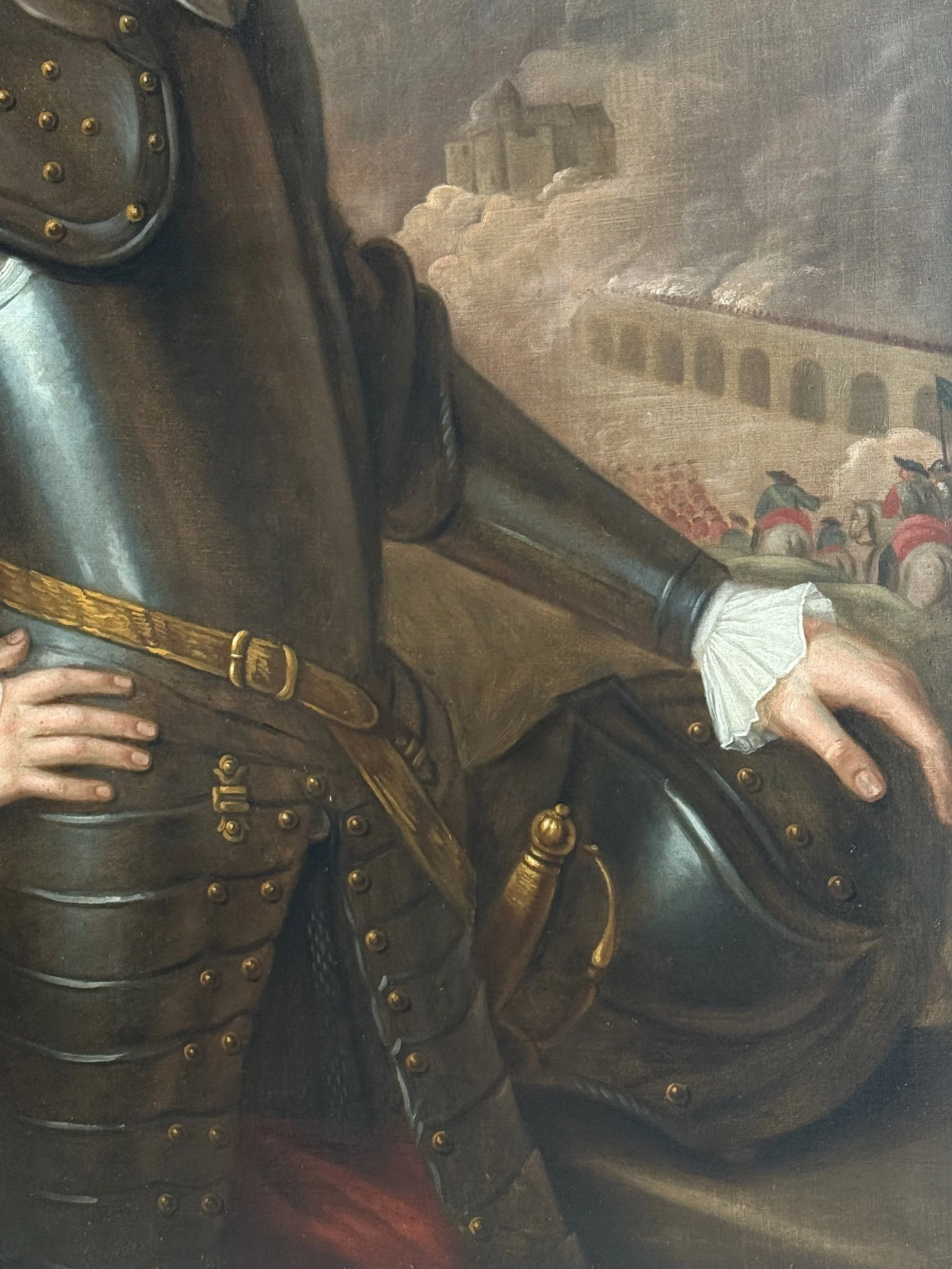
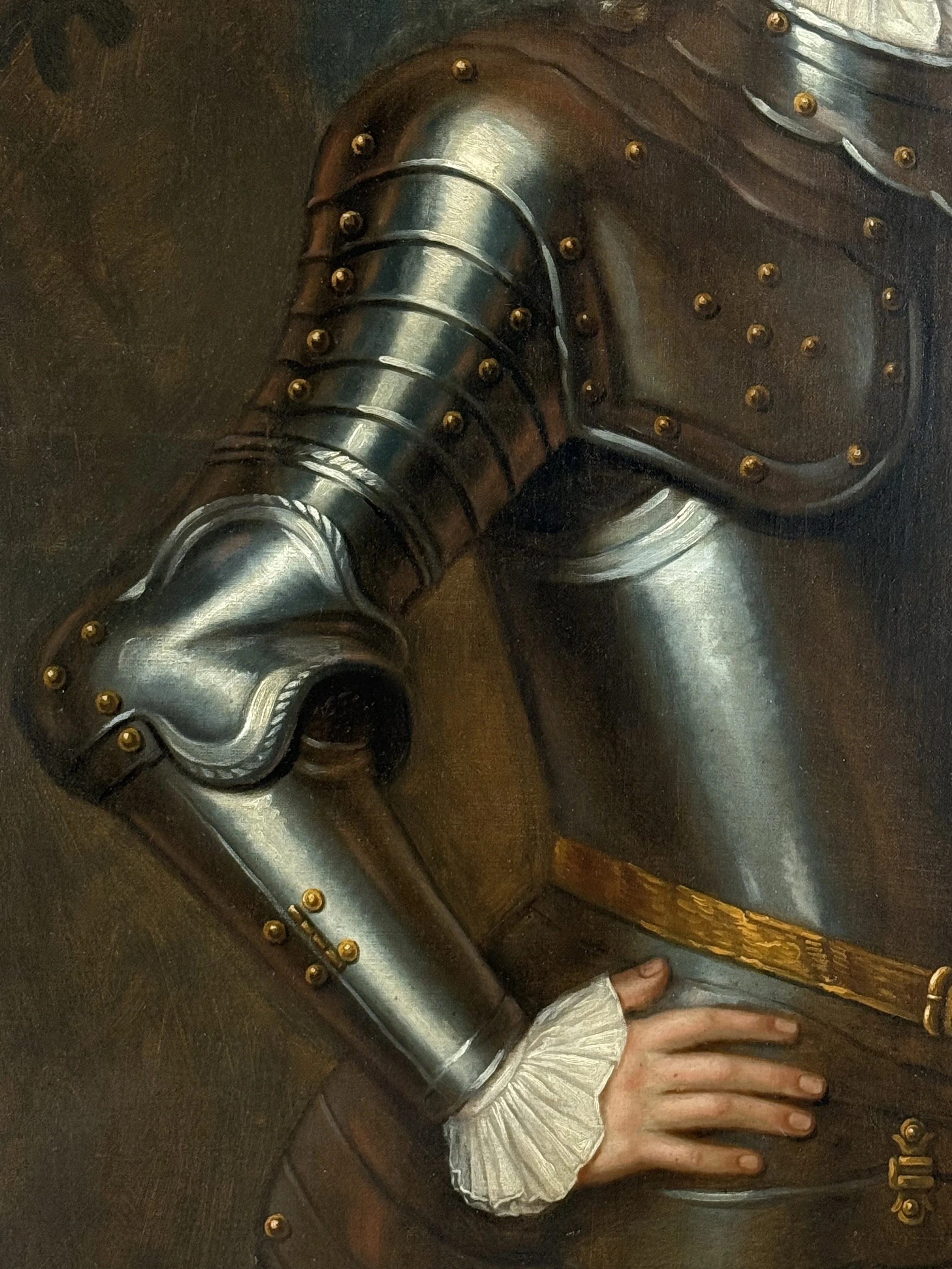
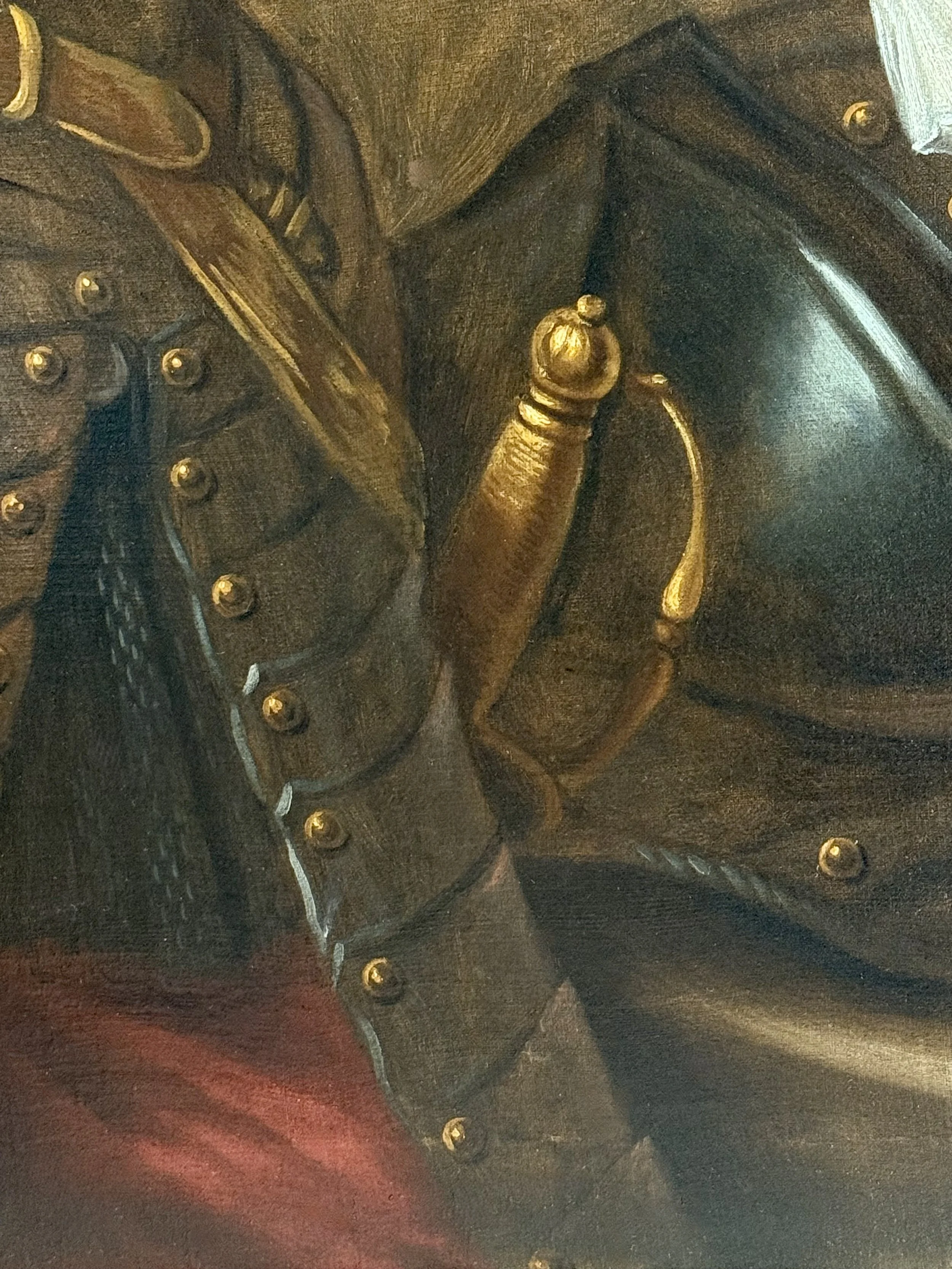
The sitter wears a suit of highly polished plate armour, which the artist has meticulously painted to conure the texture and construction of polished steel. Decorated with brass studs, it was designed to protect the wearer against both edged weapons and early firearms. A cuirass (breastplate and backplate) protects his torso whilst fully articulated plate sleeve harnesses (pauldrons, vambraces, and elbow cops) protect his upper body.
The artist has rendered the sitters gleaming vambrace (forearm guard) particularly effectively using long, vertical white highlights that contrast against the deeper grey shadows, giving it a realistic, cylindrical volume. The steely severity of the sitters costume is softened by a gold-braided waist belt, crimson breeches, and his white frilled linen stock and cuffs.
To the right, beyond a dark rocky outcrop and overhanging foliage, the composition opens onto a dramatic, smoke-filled landscape and the style of this cavalry skirmish in the lower right. It features red-coated troopers in tricorn hats and a burning fortified bridge or aqueduct and such topographical and military vignettes were often standard devices in portraiture of the period, used to commemorate a sitter’s standing and service.
By 1700, three-quarter plate armour had become largely obsolete for active military service, but away from the battlefield it continued to appear in portraiture where it was used as a symbolic convention by the aristocracy to denote their rank, command, and nobility.
John Smibbert (1688-1751) The son of an Edinburgh wool dyer, John Smibert was apprenticed to a house painter and plasterer before training as an artist in London from 1713. He returned to Edinburgh two years later and soon completed his first portrait commissions. After a stay of three years in Italy during which time he studied the Old Masters, in 1722 he opened a portrait studio in London. By 1728, however, Smibert was persuaded to travel to the British colony of Bermuda in order to teach painting at a college that had not yet been founded. This mission proved unsuccessful and Smibert settled in Boston where he married the well-off daughter of a schoolmaster. He became a man of social standing and a successful portrait painter, who was to have considerable influence on later American portraiture.
George Rae (1817-1902) Born and raised in Aberdeen first 21 years of his life in northeast Scotland before moving to Liverpool. His early training in Scottish law and branch banking laid the groundwork for his later career. Where Rae was a wealthy banker who lived at Redcourt in Birkenhead, on the Wirral side of the River Mersey.He was a major patron of the Pre-Raphaelite Brotherhood. At one point, he owned more works by Dante Gabriel Rossetti than any other collector in the world, alongside major pieces by Ford Madox Brown, Arthur Hughes, and William Holman Hunt. Many works from his collection are now housed in major public galleries, including the Walker Art Gallery the Lady Lever Art Gallery in Port Sunlight, and the Tate.
Quisque iaculis facilisis lacinia. Mauris euismod pellentesque tellus sit amet mollis.