
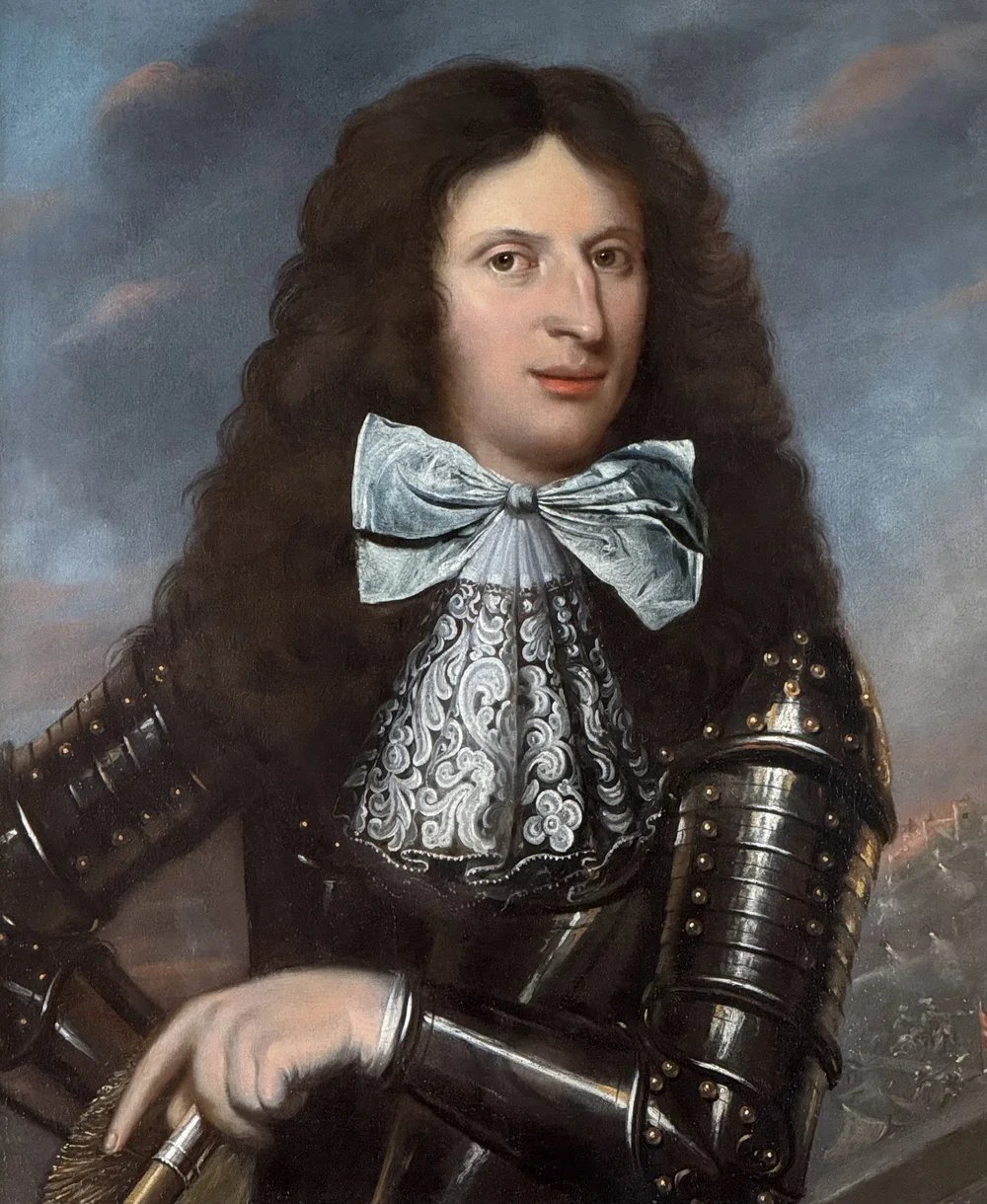
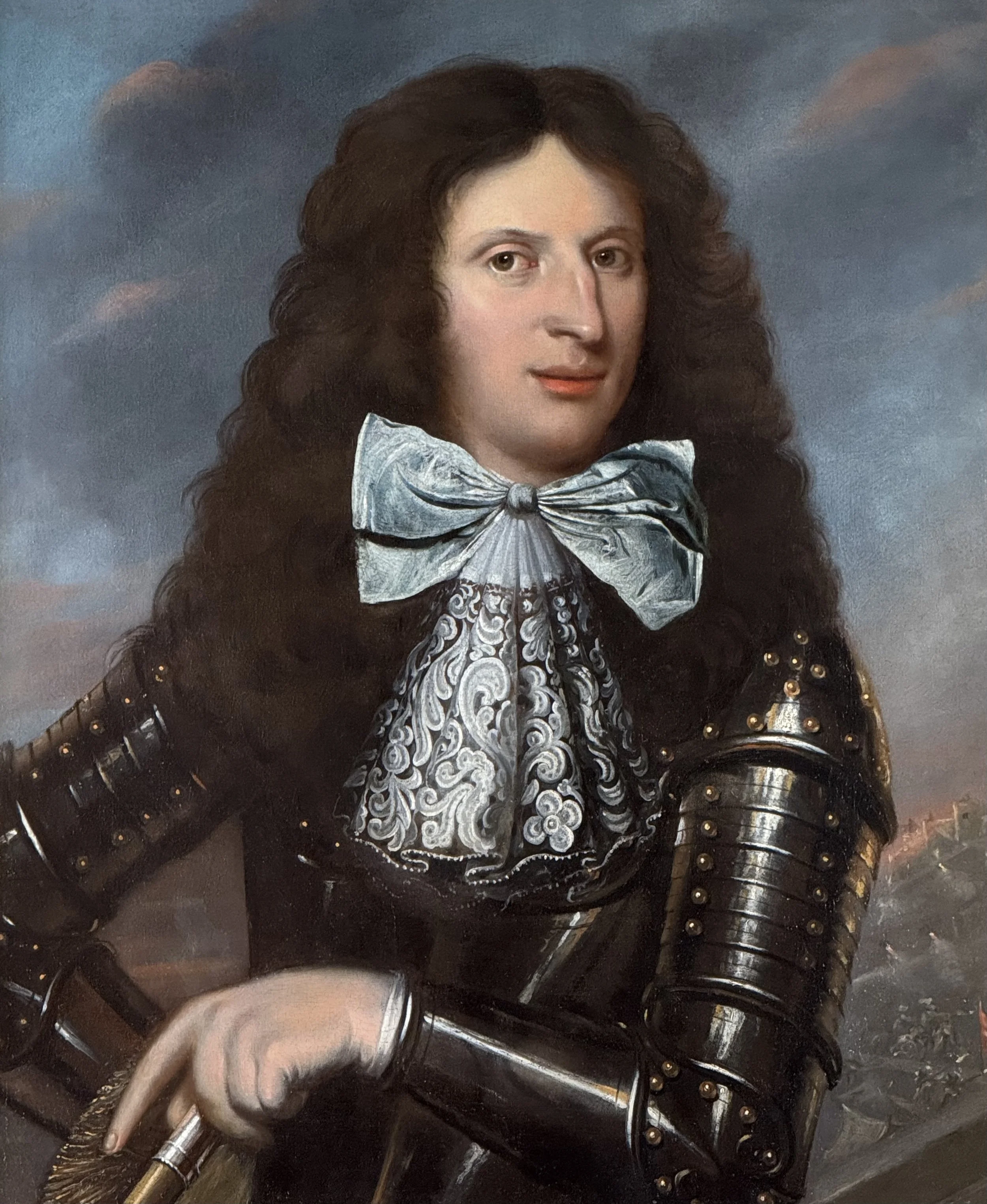
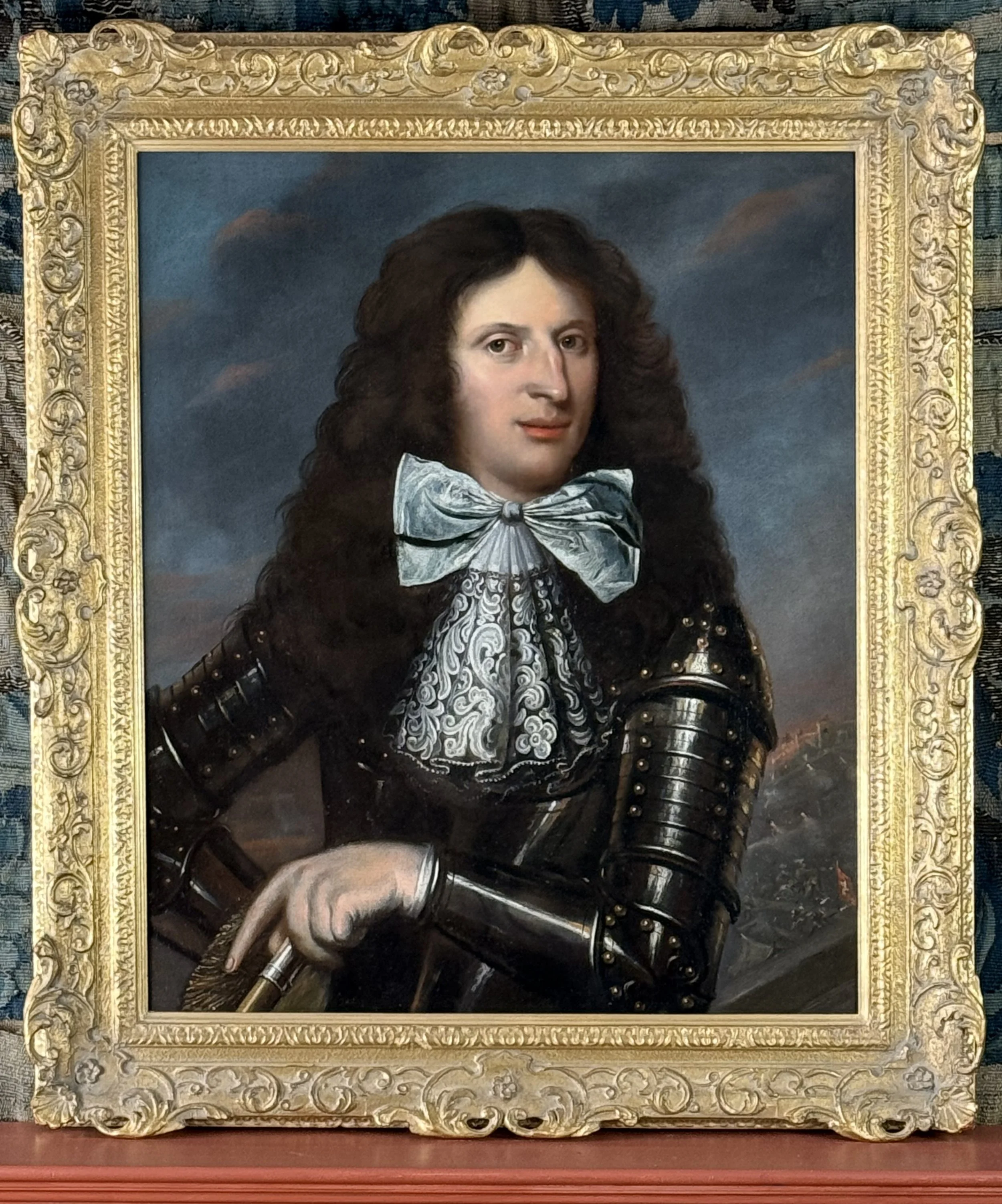
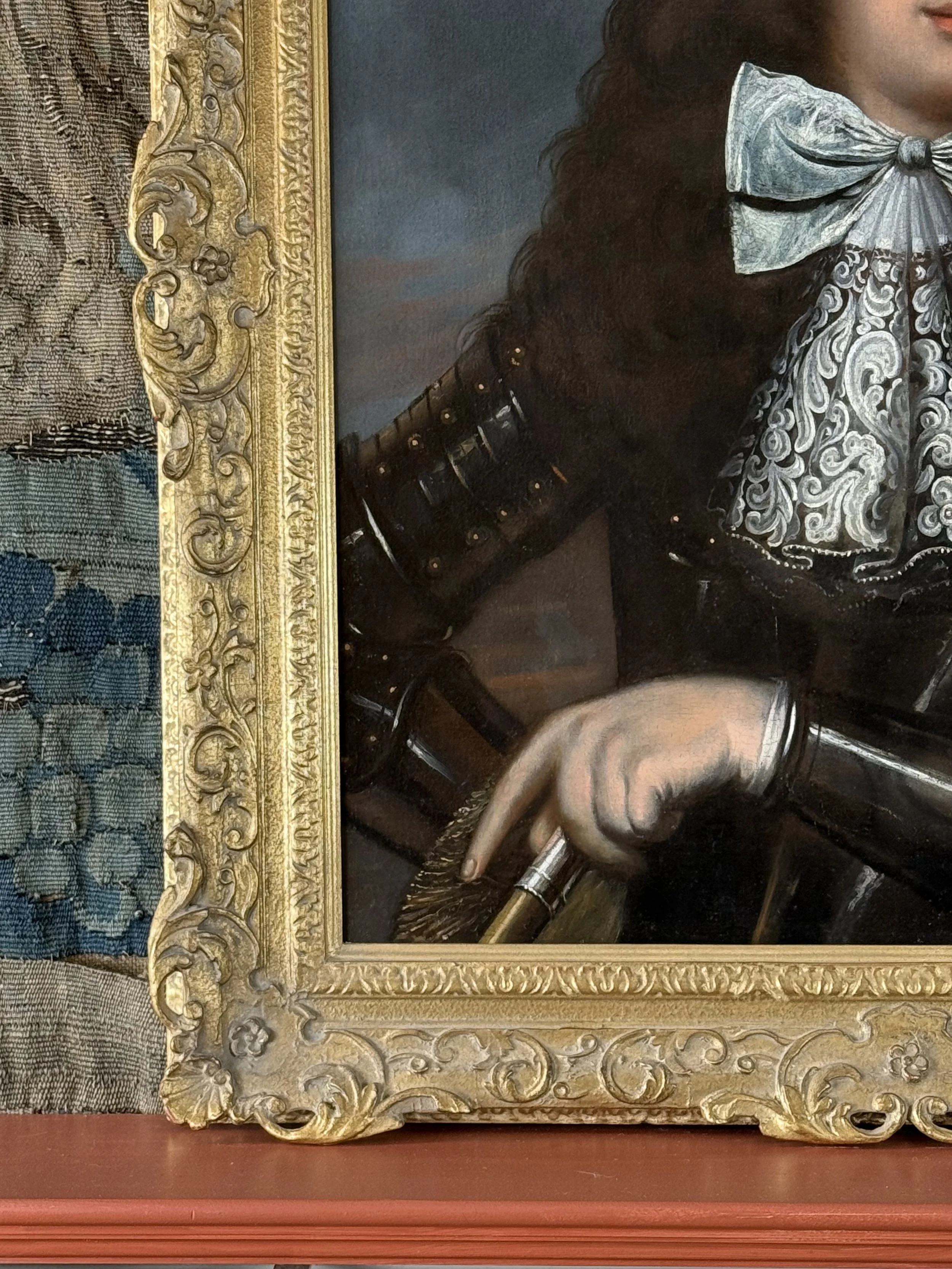
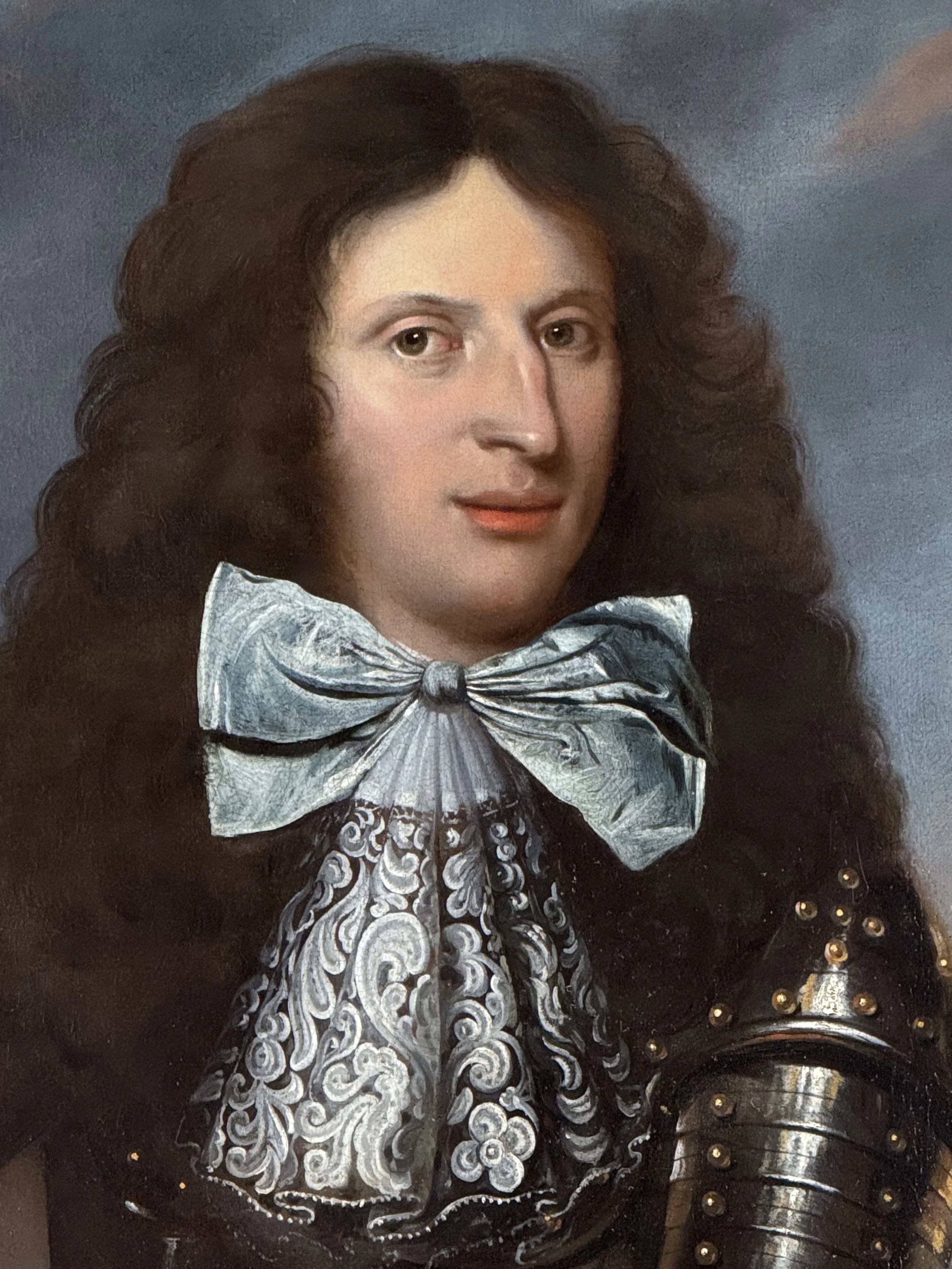
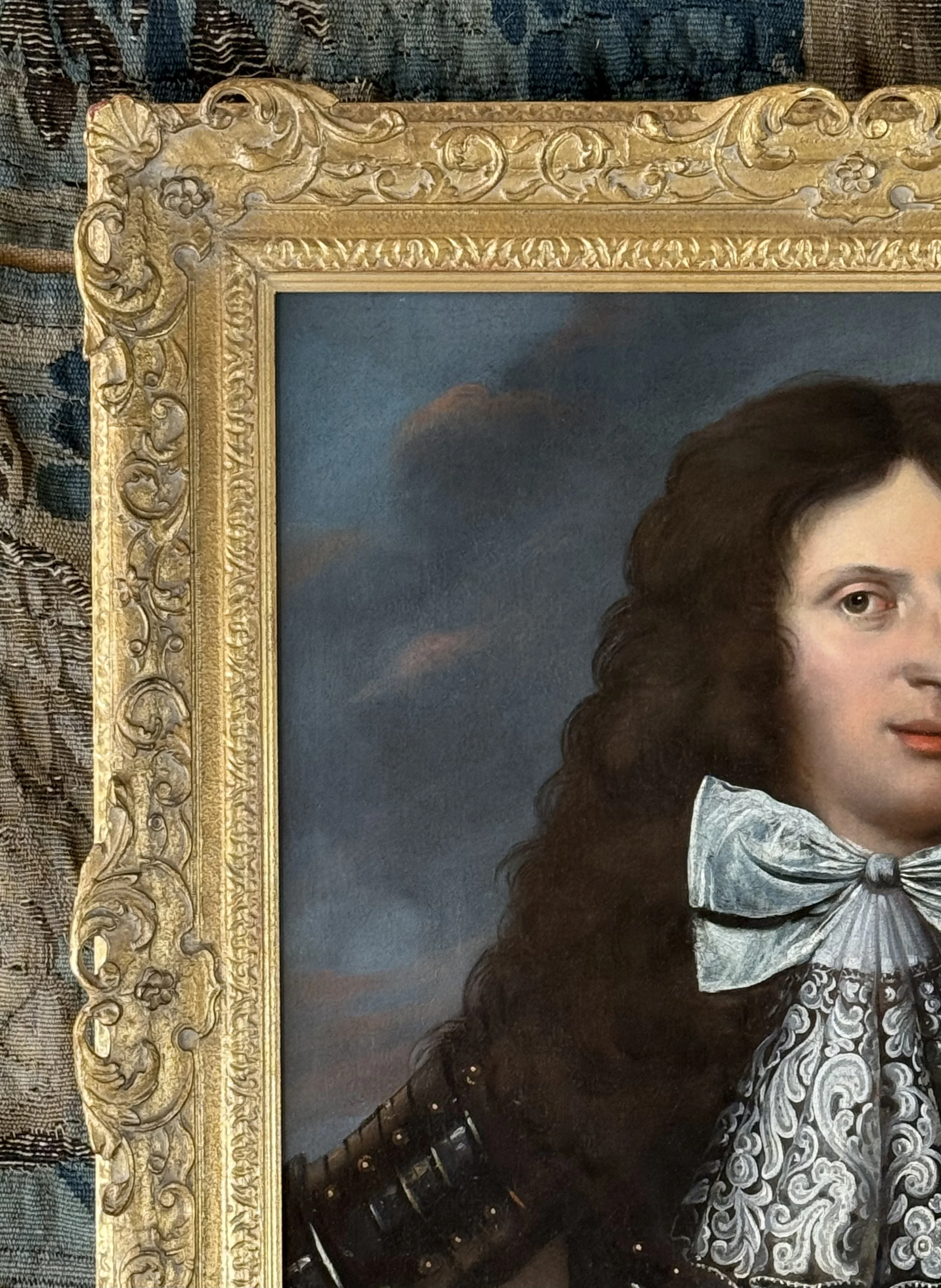
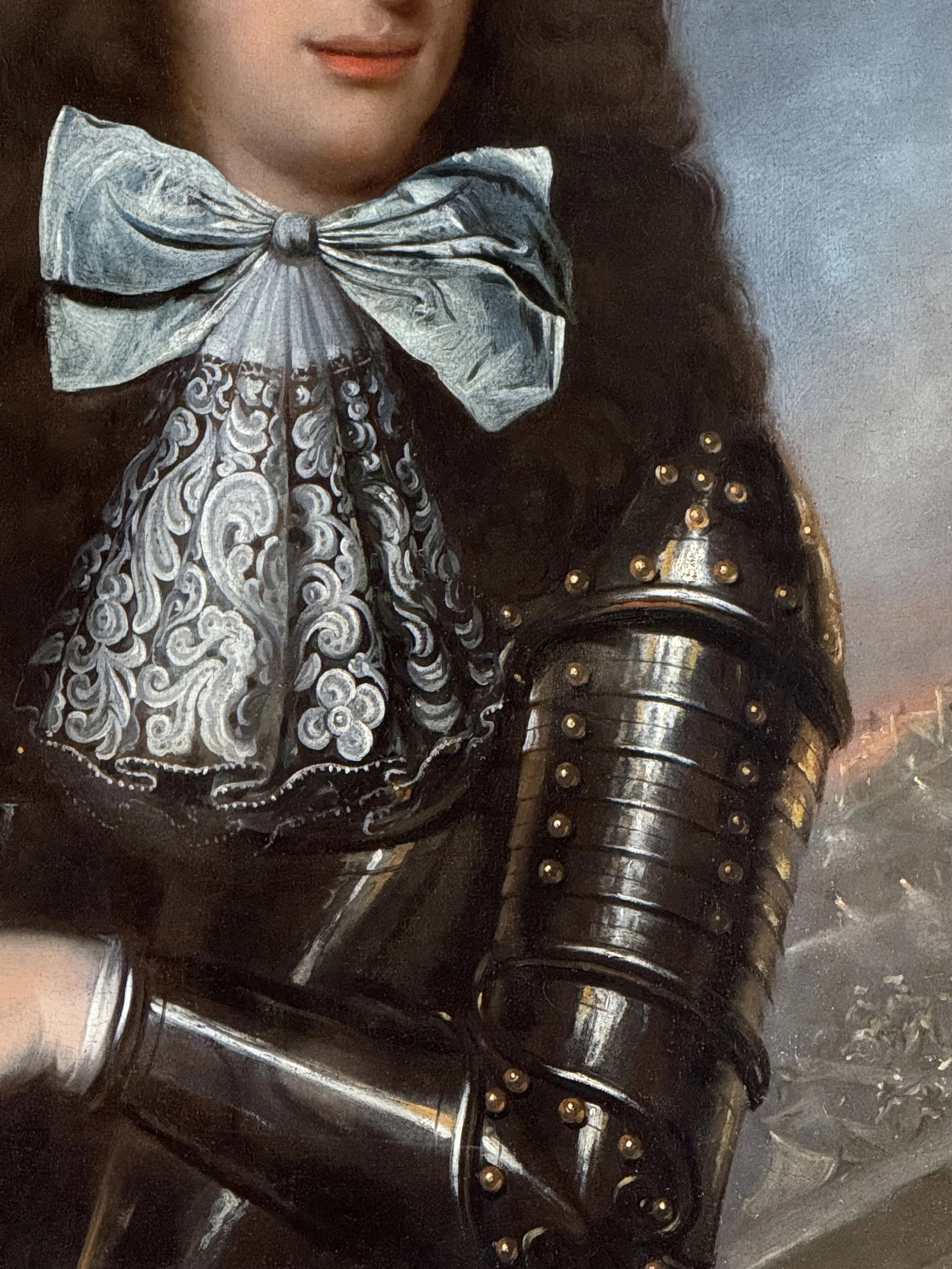
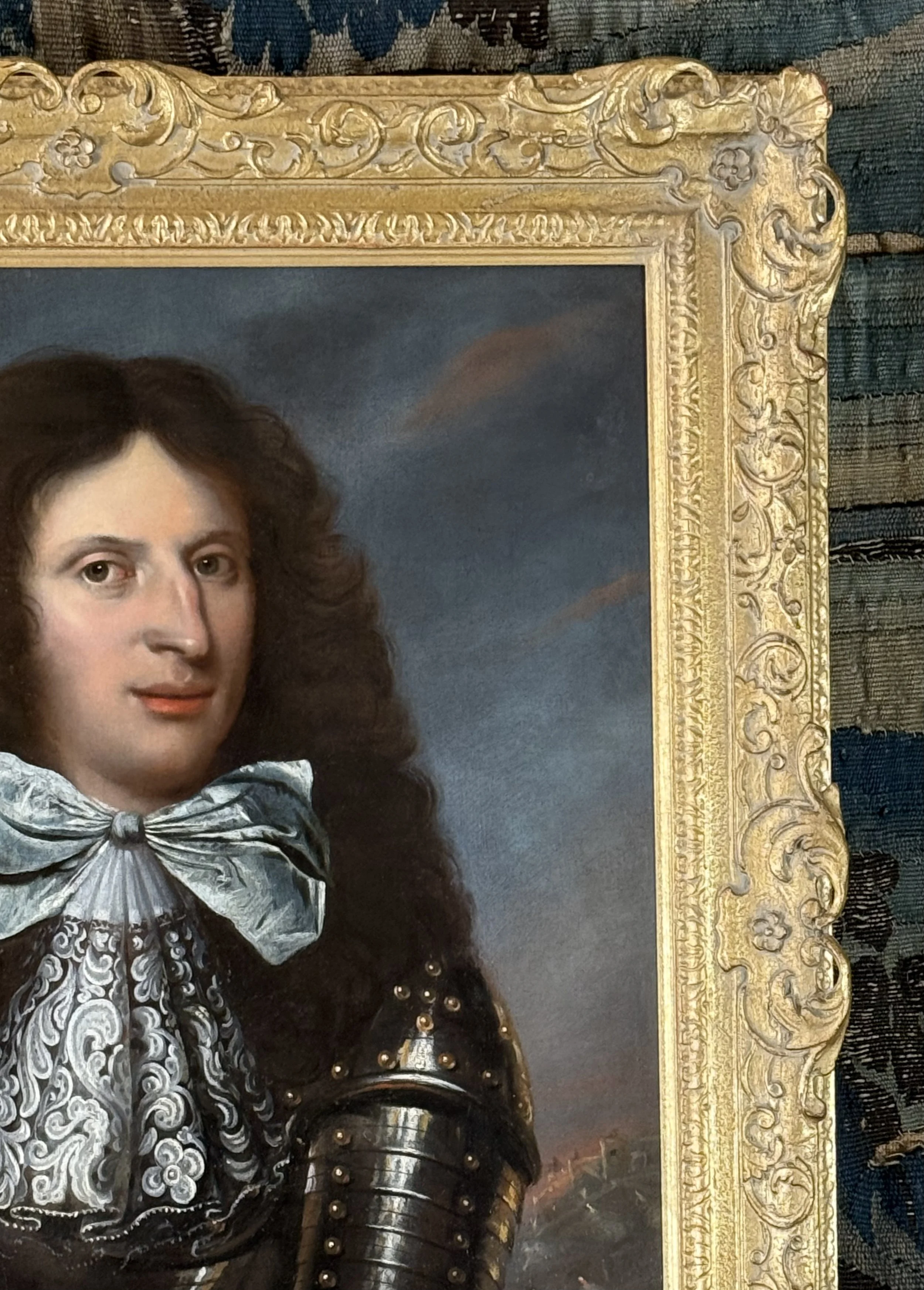
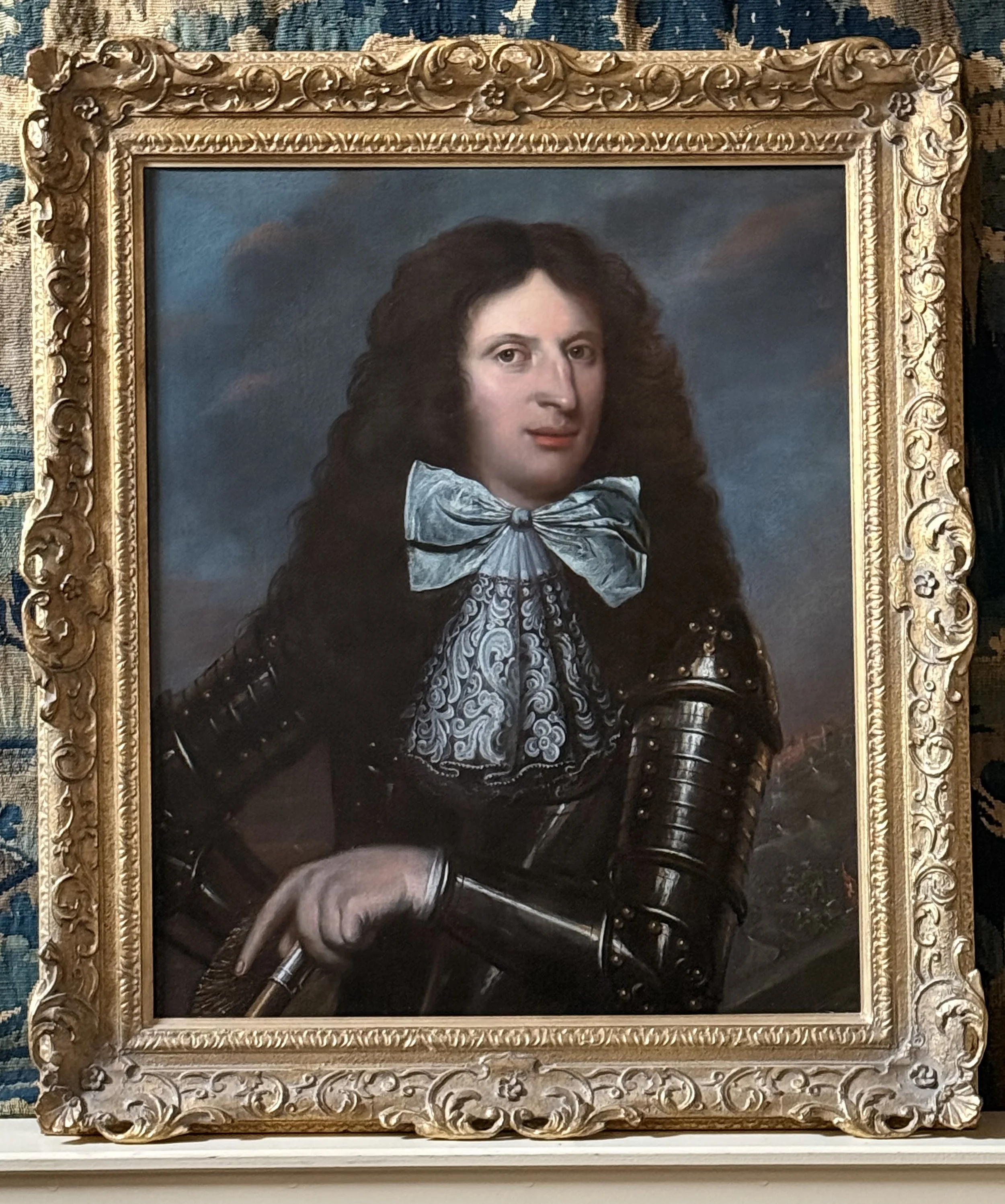
KING WILLIAM III IN ARMOUR, A BATTLE IN THE DISTANCE - FRENCH SCHOOL c.1680.
This impressive and atmospheric portrait depicts King William III, sovereign Prince of Orange from birth, Stadtholder of Holland, Zeeland, Utrecht, Guelders, and Overijssel in the Dutch Republic from the 1670s and King of England, Ireland, and Scotland from 1689 until his death in 1702.
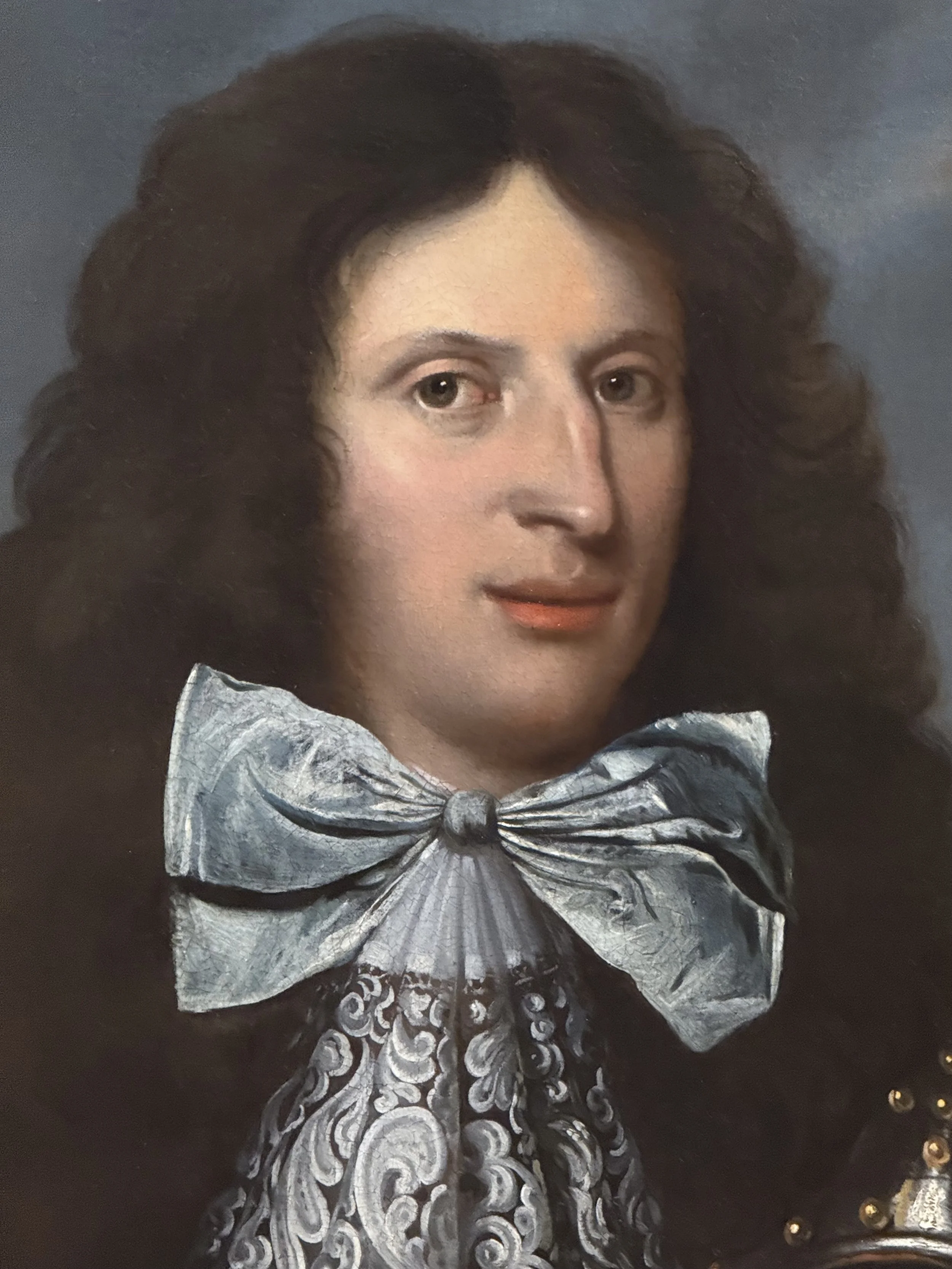
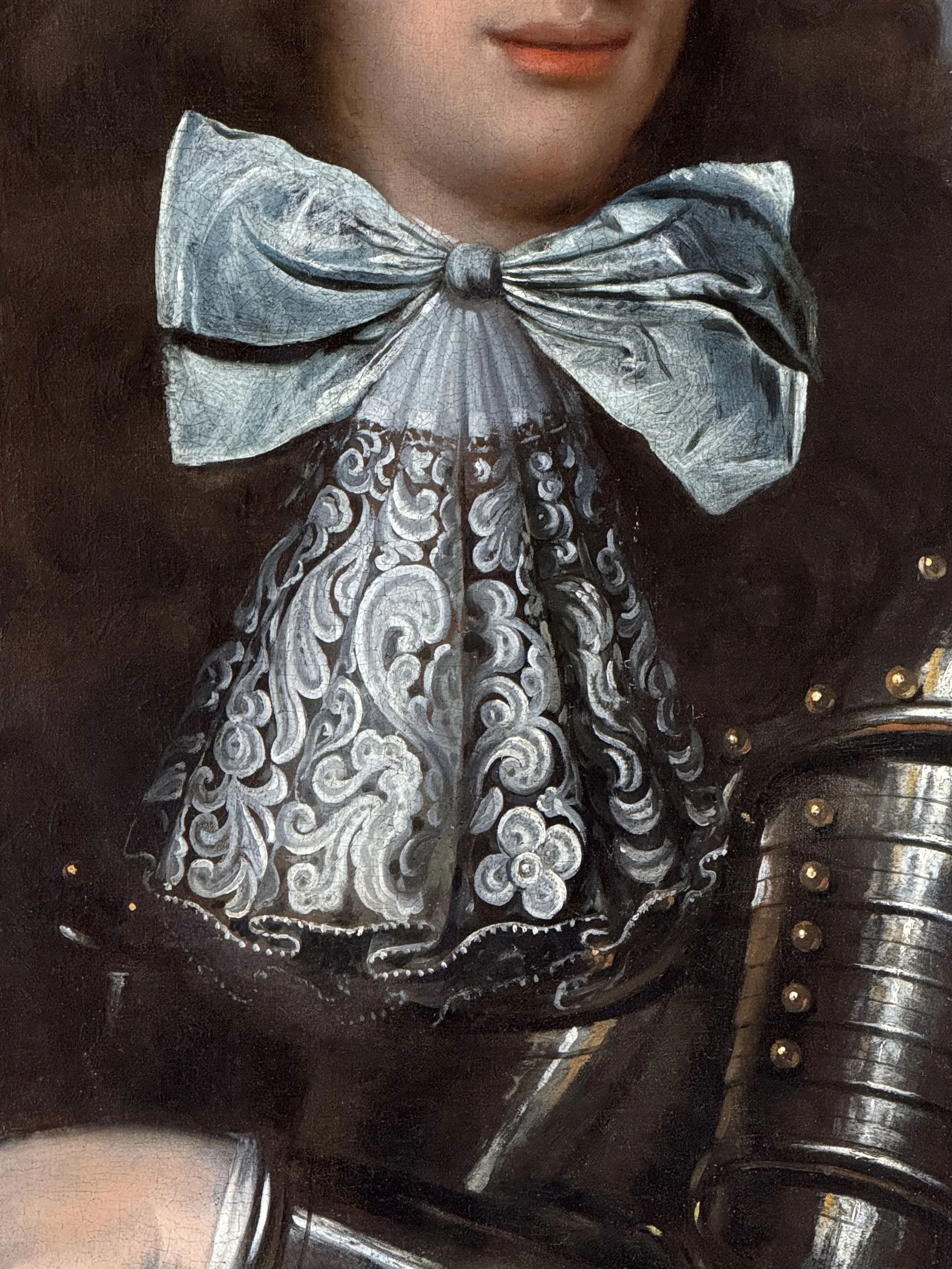
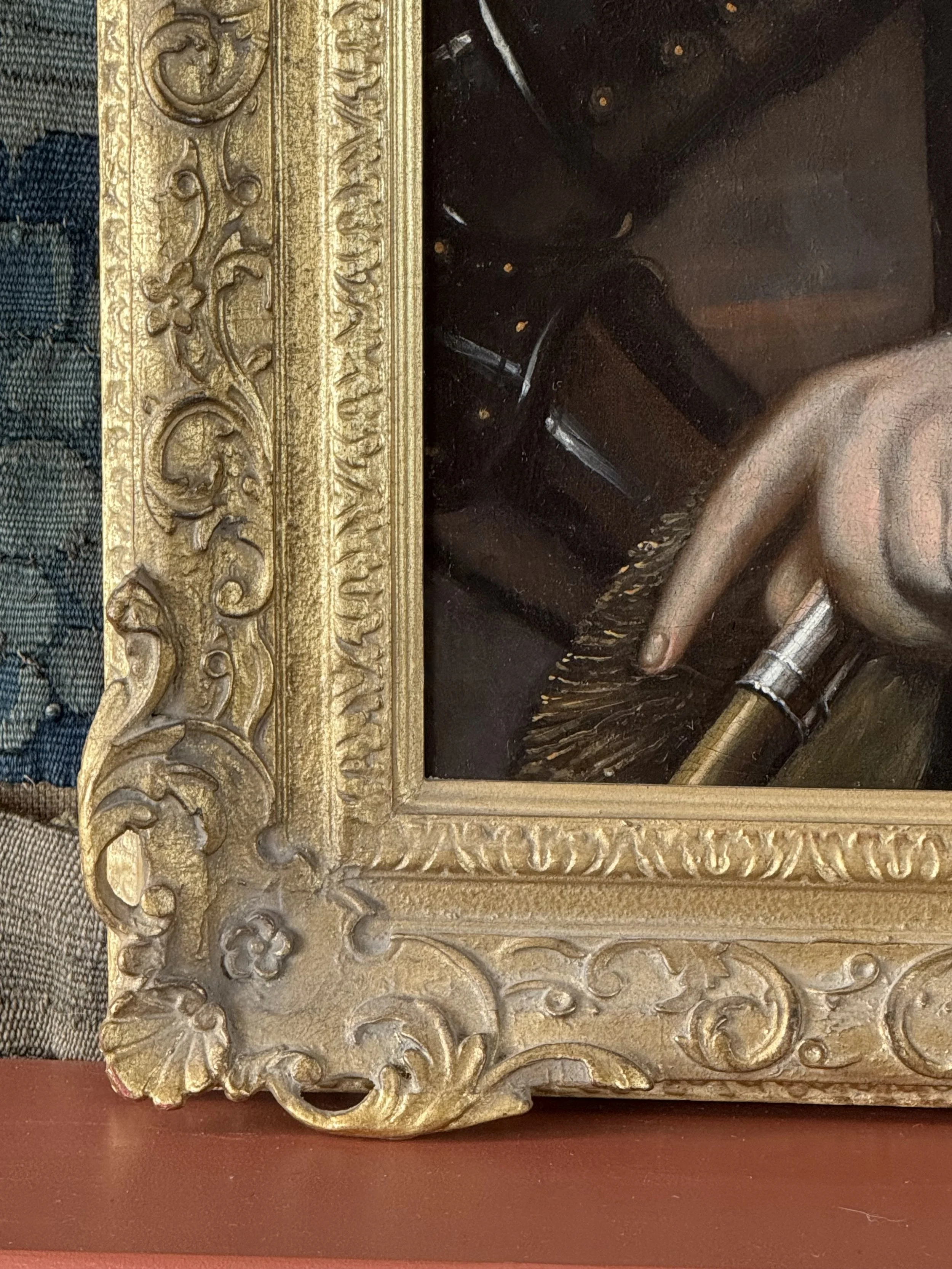
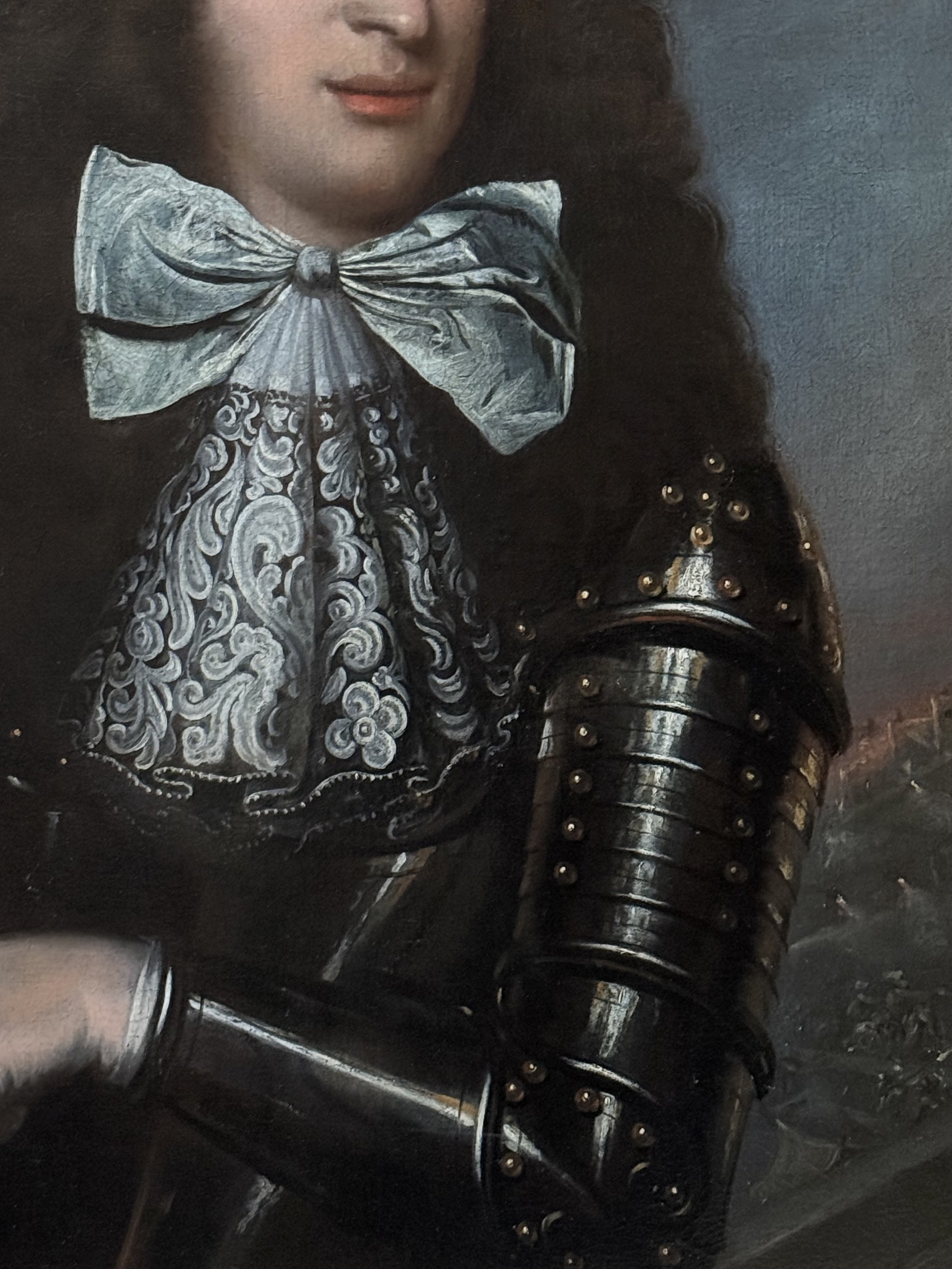
Painted circa 1680 the monarch stands upon the battlefield wearing full armour, a fashionable long wig, a finely worked lace cravat and and extravagant pale blue silk bow. In his hand he holds a silver topped command baton.
This fine and sensitively rendered work is the epitome of the early propaganda portrait. Images such as this were an essential tool that King William and his supporters used to emphasise and glorify his importance and further his cause.
King William III (1650-1702), Reigned 1689-1702. Born and raised in The Netherlands, William III was the posthumous son of the Stadholder William II. Arriving into this world just eight days after his father’s death, this Dutch prince would go on to transform British history with his wife by his side. He ruled in a unique joint monarchy with his wife, Mary II, an arrangement recorded only once in British history.
His time on the throne saw fundamental changes to the British constitution, most importantly through the passage of the Bill of Rights in 1689. This vital legislation established parliamentary sovereignty, laying the foundations for modern democracy.
His youth was passed under the shadow of Republican ascendancy, since his father's bid for personal power had provoked a strong reaction. He became a proficient student of languages, growing up frugal, temperate and reserved, though capable of deep devotion, as, for instance, to his faithful Bentinck. William married his cousin Mary, daughter of James II and Anne Hyde in 1677. William’s lifelong ambition was to stop France expanding its territories, and his interactions with Britain were all driven by this goal. In 1688, fearful of James II’s alliance with France he accepted the invitation of seven leading Englishmen to land in Britain with an armed force to preserve Protestant liberties. He invaded with an armed force, met little resistance and, after the flight of James II, he and Mary were jointly crowned. He showed great magnanimity to his enemies, and considerable skill in making the best of the English political situation, though he experienced much opposition to his rule.
His reign was notable for new restrictions on royal power and increased religious tolerance, but also for war in Europe, battles in Scotland and devastating wars in Ireland.
Higher resolution images upon request Worldwide shipping available.
Canvas: 30” x 25” / 76.5cm x 63.5cm Frame: 35” x 31” / 88.5cm x 78.5cm
SOLD
Quisque iaculis facilisis lacinia. Mauris euismod pellentesque tellus sit amet mollis.